Work / Case study / Precision Medical Group
From legacy platform to AI-native clinical operations
Architecture, hands-on engineering and embedded CIO leadership at Precision Medical Group.
Through GKIM, I became embedded with Precision Medical Group as fractional CIO in January 2026. Working closely with its practising physician CEO, I led technology and business strategy while personally architecting, designing and building AI-native applications.
The work helped make complex genetics-testing support practical at clinical volume and contributed to $70,000 per month in gross HR savings.
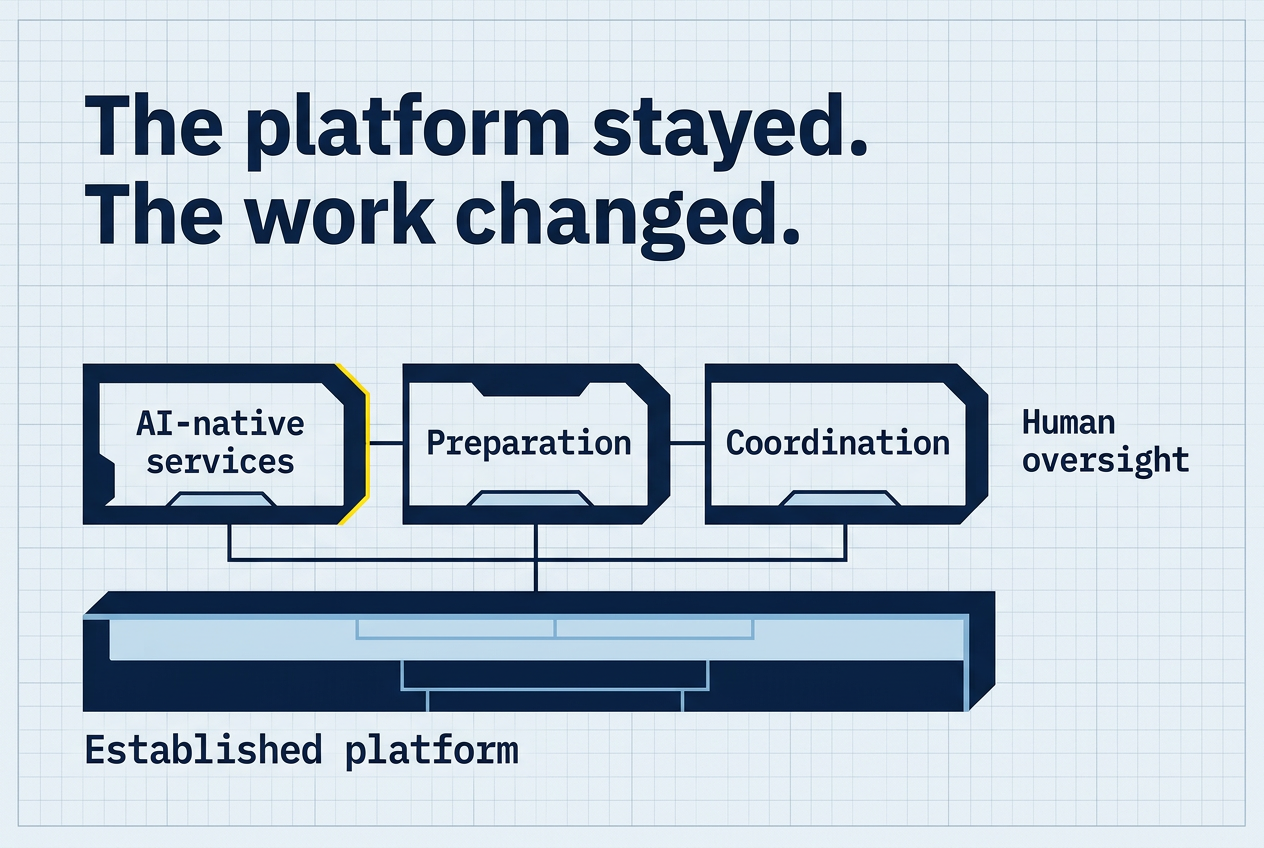
Fig. 01 / Evolution, not replacement. Specialised services work alongside the established platform.
At a glance
- Role
- Embedded fractional CIO, through GKIM
- Contribution
- Strategy, architecture, application design and hands-on agentic engineering
- Delivery
- Production integration and deployment by the technical team
- Outcome
- $70,000 per month in gross HR savings and increased clinical capacity
Gross savings exclude AI infrastructure, development and ongoing supervision costs. Operating claims are Ian-attested, not independently verified; the clinical-capacity report is attributed to PMG’s Chief Medical Officer.
The challenge
PMG had an established digital operating platform. Introducing AI required changes to both its architecture and the way work moved between patients, operational staff and physicians.
Genetics testing presented a particularly demanding problem. Physicians needed to assess medical utility, understand relevant guidance and assemble supporting evidence within the time available for a consultation.
The opportunity was to make that preparation systematic and usable while preserving physician responsibility for clinical decisions.
What I designed and built
I designed an incremental transition in which specialised AI-native services could work alongside the legacy platform and progressively assume operational responsibilities.
My hands-on work covered genetics-testing support and engagement playbooks for physicians’ virtual front office. The scope included medical necessity and utility assessment, ordering preparation, case notes and proposed care-plan adjustments.
I used Kiro to develop the applications. The technical team subsequently used Codex and Claude Code to integrate and deploy them into real operations.
Making complex evidence usable
For pharmacogenomic testing, uncertainty about medical value and the complexity of guidance had constrained routine use.
The support workflows prepare recommendations with traceable evidence for physicians to review and edit. Development included consultation support that extracts relevant facts, suggests clarifying questions and prepares supporting language, alongside a structured evidence-based advisory engine.
Early work revealed that detailed analysis could overwhelm physicians handling significant volume. I summarised and contextualised the evidence so that previously impractical capabilities could fit into everyday clinical workflows.
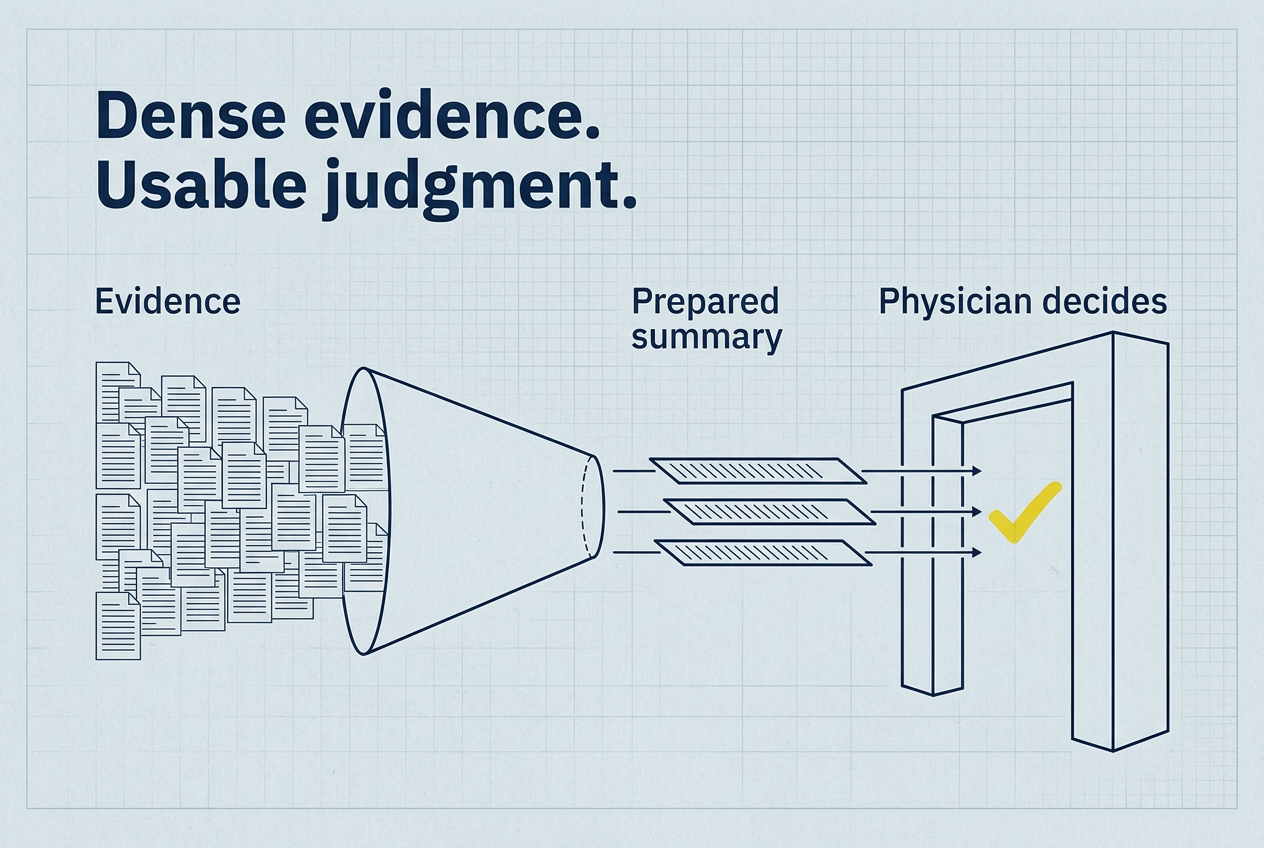
Fig. 02 / Evidence made usable. Preparation supports physician review and judgment; it does not replace clinical authority.
Clinical oversight
I wrote AI guardrails, reviewed by PMG’s Chief Medical Officer. Physicians approve clinical outputs, orders and care-plan changes. Humans handle operational exceptions.
Agents undertake preparation and coordination; the physician reviews the evidence and decides how to act.
Operating impact
The transformation contributed to the elimination of 20 engineering and front-office roles, delivering $70,000 per month in gross HR savings. Two engineers and two front-office staff remain, with human exception handling continuing alongside the agents.
The savings figure excludes AI infrastructure, development and ongoing supervision costs.
PMG’s Chief Medical Officer reports that the work enabled medical decisions at a scale that previous time and throughput constraints had prevented.
My approach
This engagement combined executive accountability with hands-on delivery across platform architecture, agentic engineering and medical processes.
My approach was to identify meaningful responsibilities for agents, build the services and clinical boundaries around them, and partner with the delivery team to turn those capabilities into operating change.
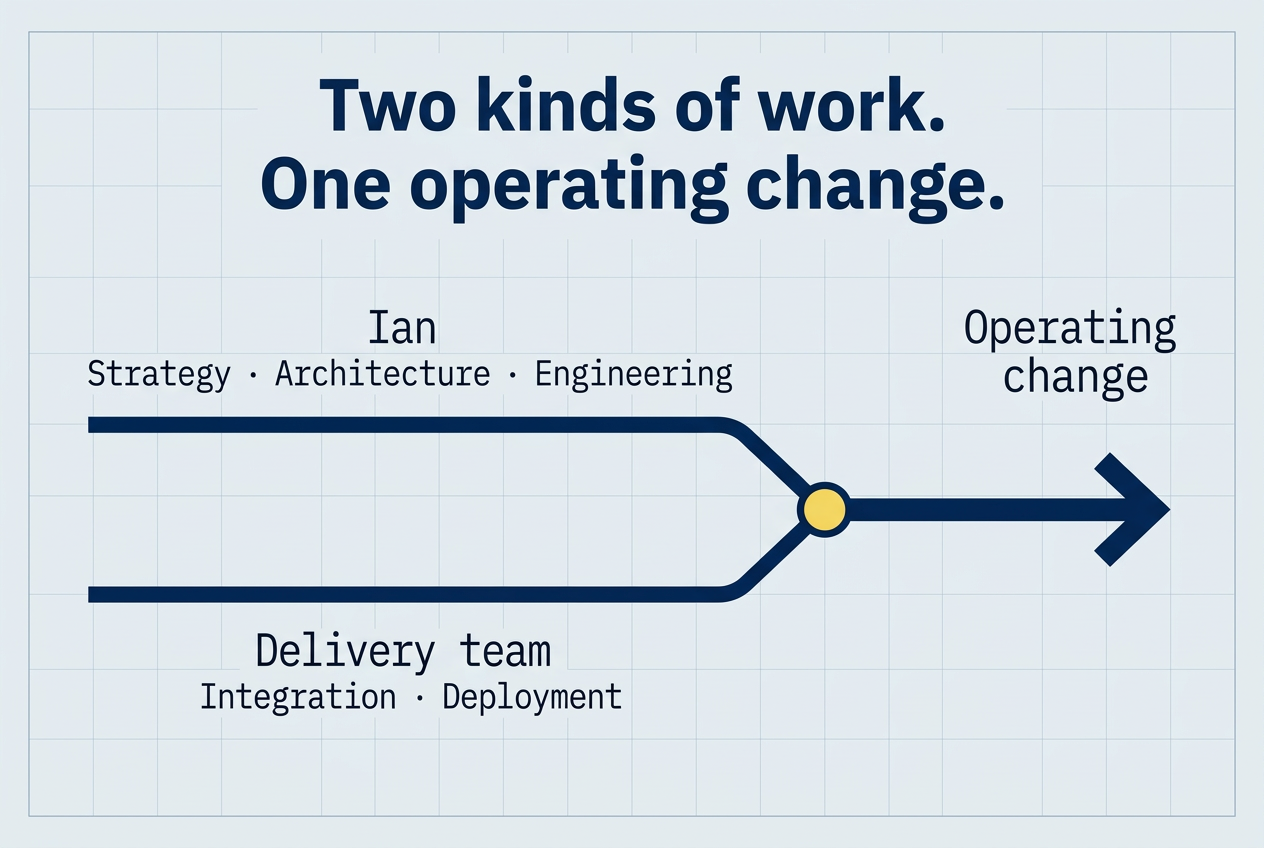
Fig. 03 / Distinct contributions, shared operating change. Ian’s hands-on design and engineering connect with the delivery team’s production integration and deployment.